Connect with the Artist: Silindokuhle Shandu
So, let’s get to know Silindokuhle Shandu
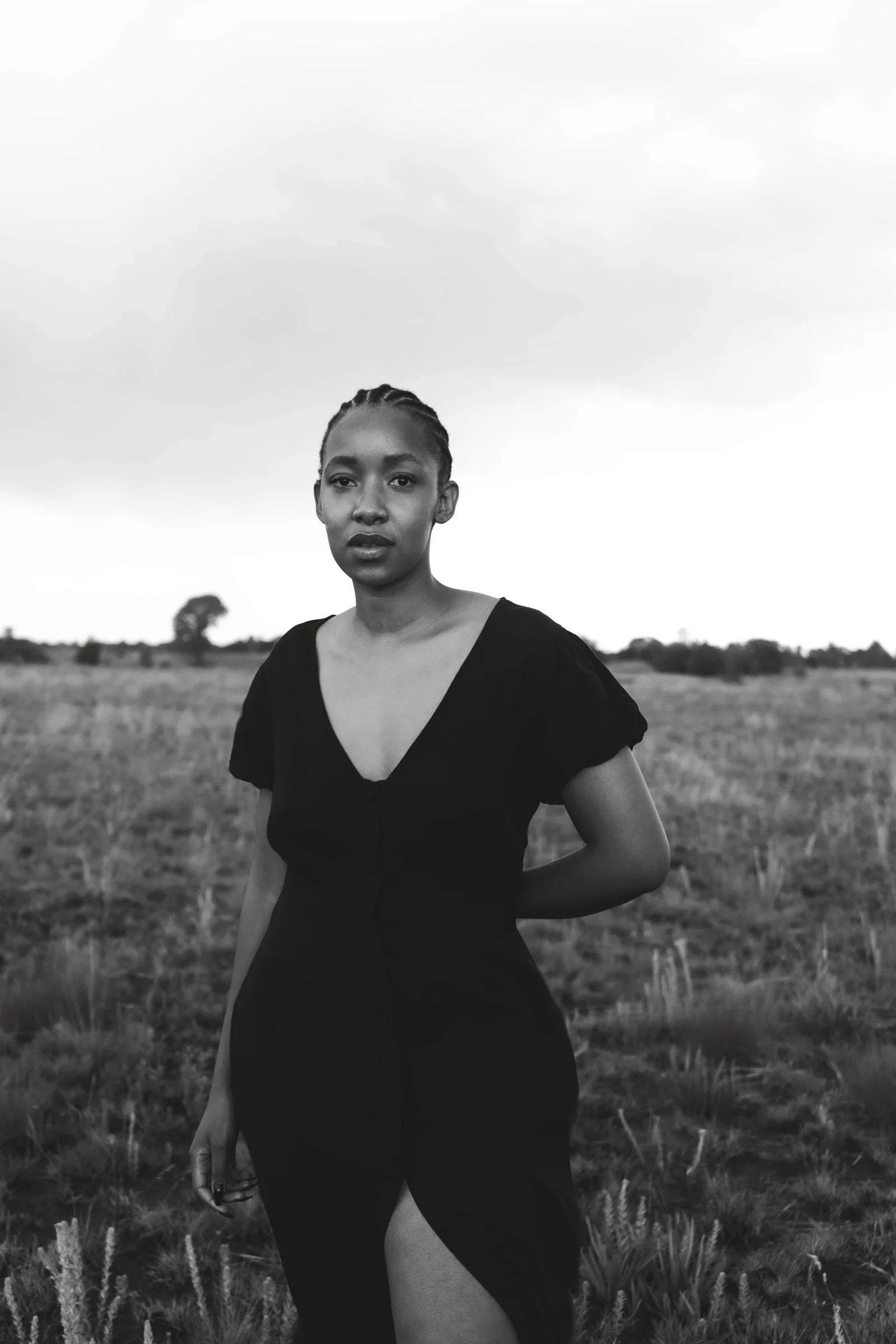
Mpumi Mayisa sat down with Silindokuhle Shandu for a little peek behind the practice, from what gets her creative, to what’s playing in the studio, the joys of collage, a good meal, and the place she calls home. MM: Describe your work in five words. SS: Personal, reflective, nostalgic, contemporary and reconstructive. MM: When do you feel most creative, early morning, late at night, or somewhere in between? SS: Somewhere between morning and early afternoon MM. Favorite meal to cook to impress someone? SS: Spaghetti and meatballs MM: What's your studio mantra? SS: “Use what you have” and “Just start!” MM: What is your favourite part of working with collage? SS: Getting to build worlds, tell stories and start conversations once the work is finished.
Let's dive into the work..
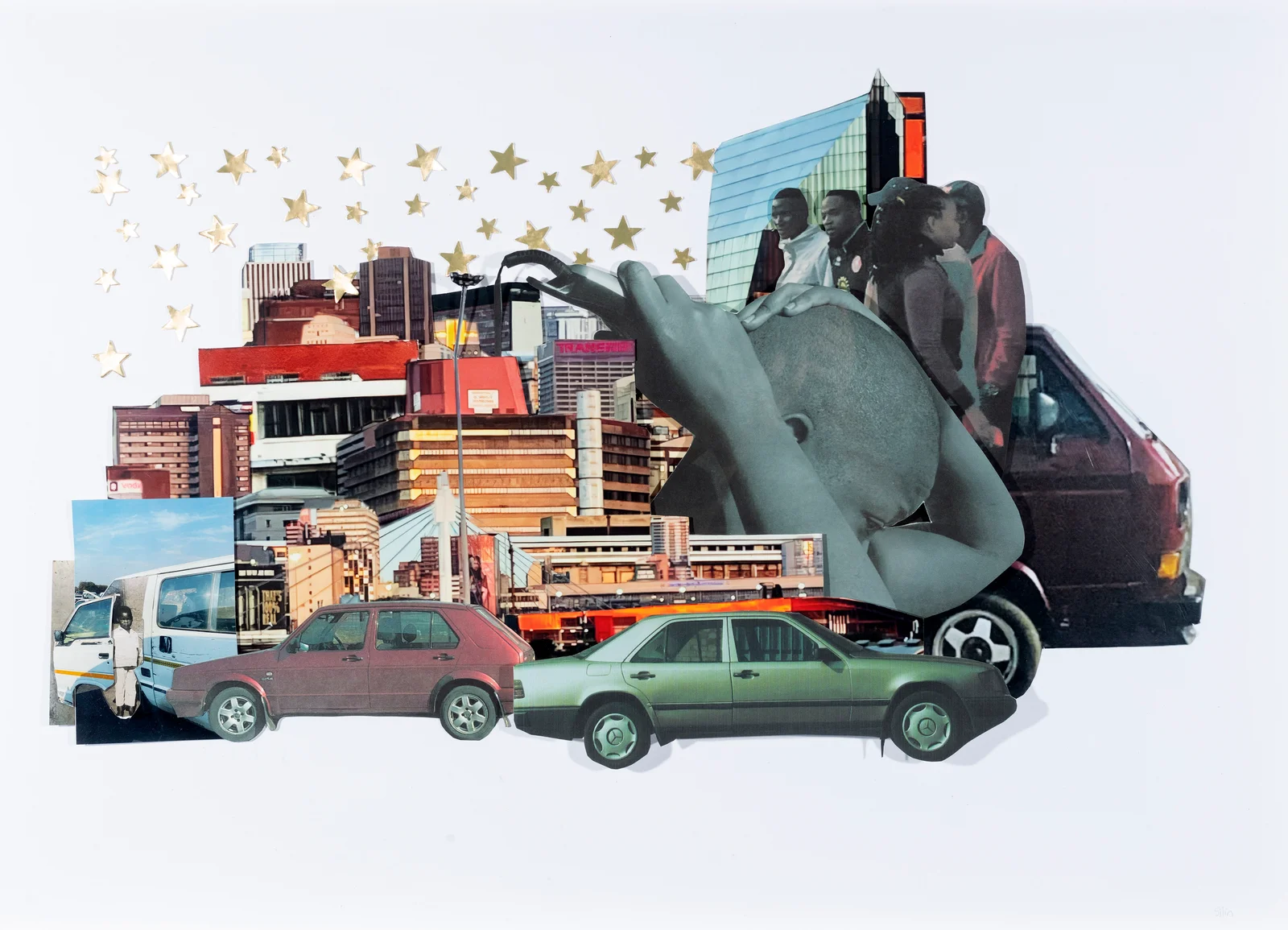
MM: What are the ways you’ve augmented reality with the archive through reconfiguring the images you work with? SS: I augment reality by treating the archive as something that can be reassembled rather than fixed. I cut, layer, enlarge and combine family photographs and my own photographs to create new relationships between people, places and memories. The resulting images are not document literal events. They create emotional truths from fragments, gaps and imagination. MM: So much of your practice feels connected to what we inherit. When you work with familial archives, what are you looking for that perhaps isn't immediately visible in the photograph itself? SS: I’m interested in the context and memory held by a photograph beyond what is immediately visible in the image. I consider where it came from, who is in it, what the moment represents and what I know about the circumstances around it. That context helps me keep the work grounded in some level of reality, even when I alter or reimagine the image. In that way I feel that I’m also paying homage to the memory the photograph holds, rather than treating it simply as an image or material to work with. MM: You describe identity as something that is continuously formed through memory, environment and lived experience. Has working with collage refined your understanding of yourself? SS: Through the work I learn about existing parts of myself while also integrating new parts of myself from the things I've learned as life continues to unfold for me. I've always had an understanding of who I was but the work gives me an excuse to look at the makings of who I am with more depth while uncovering parts of myself I had not met before.
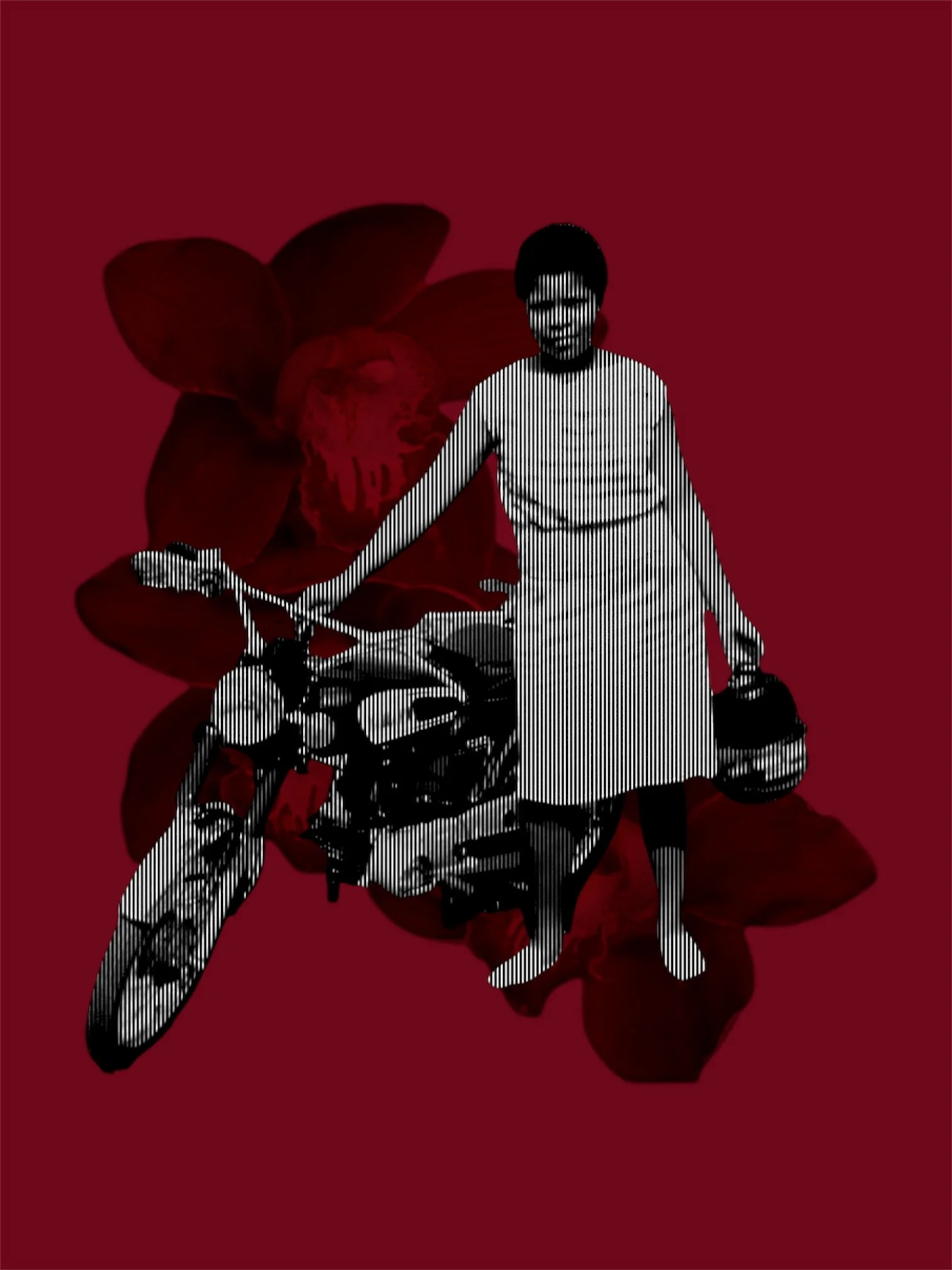
I augment reality by treating the archive as something that can be reassembled rather than fixed. I cut, layer, enlarge and combine family photographs and my own photographs to create new relationships between people, places and memories.
MM: The women who raised and shaped you appear to be an important presence within your work. How do you think their experiences, choices or ways of navigating the world weave their way into your practice? SS: They are, in many ways, all I have ever known. Because my work draws so much from my own lived experience, it feels natural that the women who raised and shaped me would leave traces within it. Their ways of moving through the world have influenced the values, perspectives and examples I grew up with, and these inevitably find their way into how I see, remember and make sense of the world through my practice. MM: You've moved through different environments, from Empangeni and eMalahleni to Johannesburg. How do these places live alongside one another in your work? SS: I've always felt somewhat like an outsider wherever I've found myself, and I think that's made me comfortable as an observer. Moving between different places has allowed me to experience them as environments I belong to and spaces I can look at, listen to and learn from. I am most comfortable when I can simply be a witness, and I think that way of seeing has found its way into my practice. In that sense, I feel that I make work between places rather than from one particular place, carrying fragments of each environment with me and allowing them to exist alongside one another. MM: Your collages and mixed-media works bring together photographs, imagery, colour and texture to create something that didn't previously exist in that exact form. What interests you about taking something familiar apart and putting it back together differently? SS: I don't speak much unless I feel I need to, so these collages are a way for me to express myself, come to terms with things and start conversations around the subject matter in the work with other people.
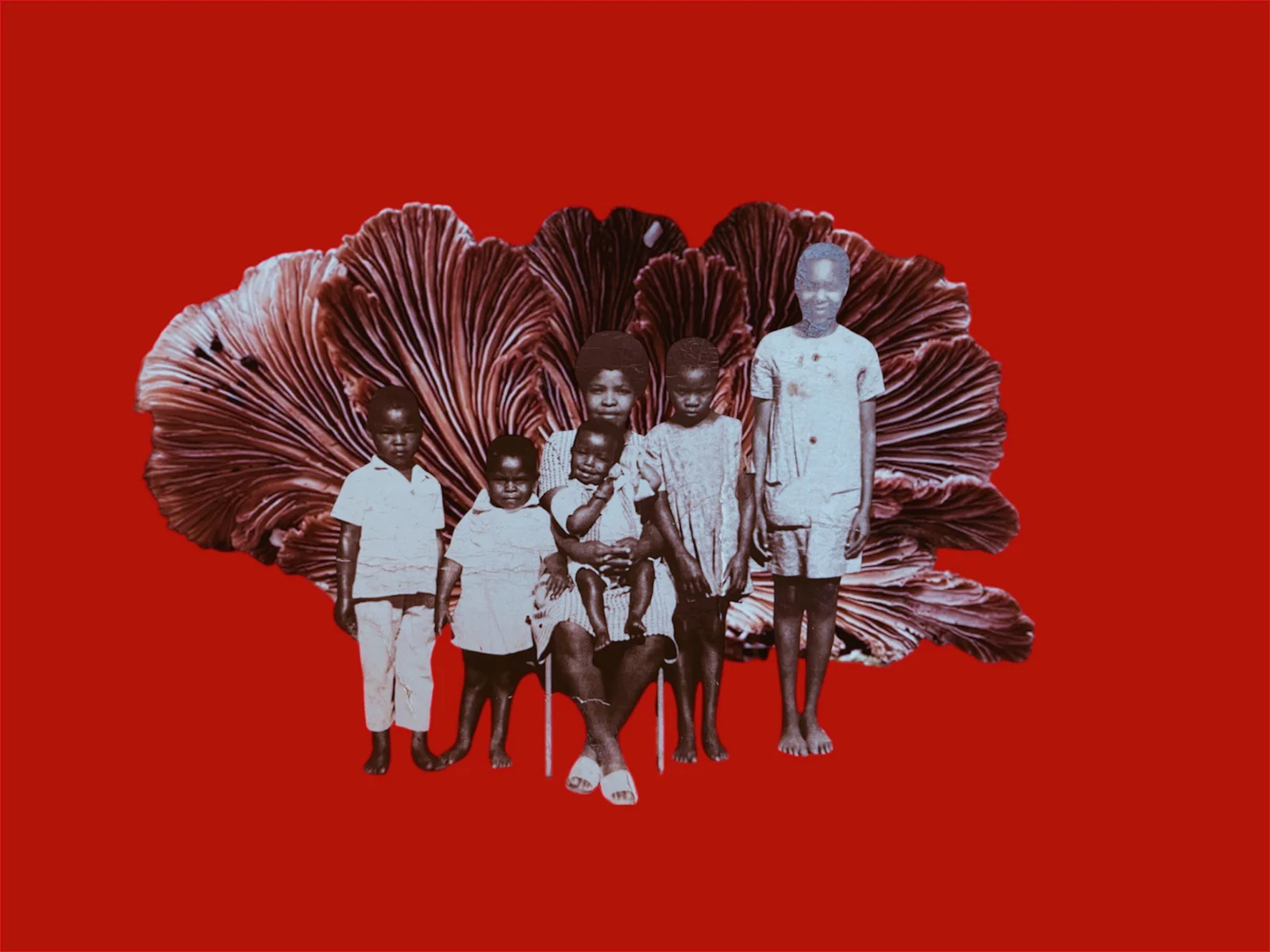
MM: Once a work leaves your studio, it enters somebody else's home, collection or life. What would you like a collector to discover about themselves while living with one of your works? SS: I'd like for them to further introspect what in or about the work spoke to them and reflect on that message or understanding with others.
Explore Silindokuhle Shandu's works For enquiries, email mpumi@tsokoart.com.